In the press: Understanding your RAAC risk is essential for building owners and managers
20 August 2026
Tom Hawthorne, Associate Director at SRVO Property shared his thoughts with AQD, read the Autumn edition here
Cheap and lightweight, reinforced autoclaved aerated concrete or RAAC, was predominately used between the 1950s and mid-1990s for the construction or repair of flat roofs. With a limited lifespan of circa 30 years, RAAC can present a significant risk of collapse, especially if the RAAC has been altered since installation or was subject to water ingress at any point in the intervening period.
Newspaper headlines tend to be focused on the presence of dangerous RAAC in schools and other public sector buildings. While less common, RAAC can be found across the residential sector including in flat roof structures of residential blocks and even high street assets. As in most assets where it is found, RAAC in residential assets will be hidden in plain sight and are almost always undocumented.
Systematic RAAC checks are not currently legally mandated.
Owners and managers of assets have no way to rule out the potential for collapse or major damages, nor when this might occur. In his article for the TPI magazine, Tom argues that reviewing whether the material is present in a portfolio is both prudent and vital, given the significant risks associated with RAAC, including a risk to life in the event of collapse.
RAAC is often discovered by chance, and often in times of change, for example during an asset transaction, installation of energy efficiency projects such as solar panels, or during planned or reactive works. Mid-project discovery will have huge implications on project cost and timelines, and can lead to legal or reputational impact.
Set the record straight: a simple desktop search can rule out the presence of RAAC in most cases
If assets were built or had roof repairs within the potential time window when RAAC may have been actively in use in the construction sector, further investigation is highly recommended.
RAAC experts will use visual checks to rule out higher risk assets, looking for flat roof structures or, in more unusual cases, French-style mansard roofs with a steep pitch and dormer windows.
Higher risk assets require a physical inspection by a chartered surveyor.
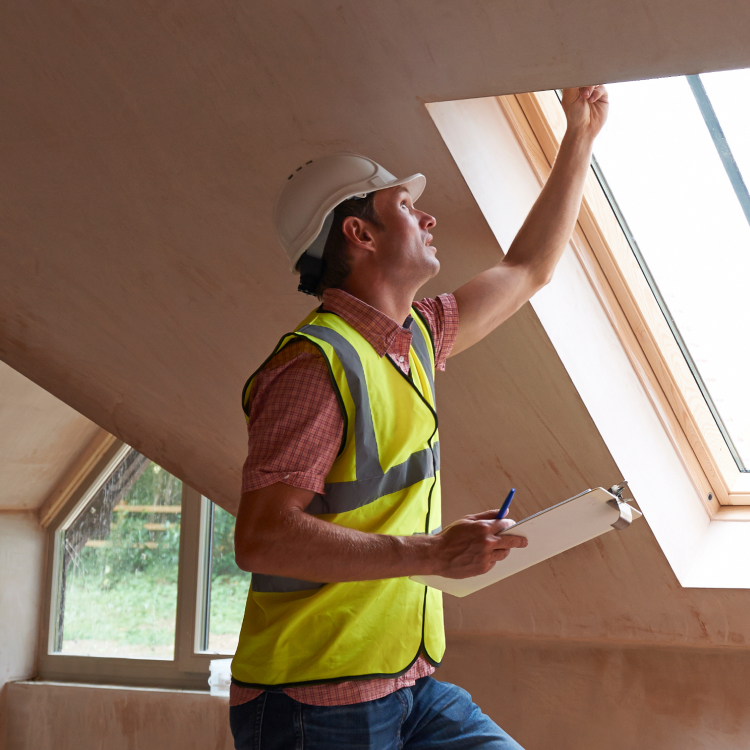
- Investigation is done from the exposed structure, typically looking up from within rather than from outside the building.
- This is often more complicated when access to individual units is required (for example, in leasehold properties).
- Once inside, the surveyor will look behind ceiling tiles or within voids so they can see the underside of the structure itself.
- If the inside of the surface has been plastered, then a section will need to be exposed.
*It’s important to note that most standard building surveys or planned preventative maintenance/capital expenditure surveys review common parts and include roof investigations from above only.
What next?
The extent of use of RAAC, if found, needs to be assessed, as this will determine the next steps in accordance with IStructE guidance.
It’s similar to asbestos in that if it’s in good condition and it hasn’t been disturbed, then the guidance is often to leave it in place and monitor.
RAAC in poor condition will be assessed in accordance with the criteria of RAAC management and may need to be strengthened from the underside or replaced entirely.
For rental properties, the cost of repairs or replacement likely falls to the asset owner. For leasehold properties, there may be an option to recover via the service charge, depending on the lease structure and responsibilities.
Identifying RAAC in a residential block means appropriate plans can be put into place immediately, removing doubt and the fear of the unknown, to give owners and managers greater clarity for the future.
Follow us
©2026 srvo | All rights reserved